
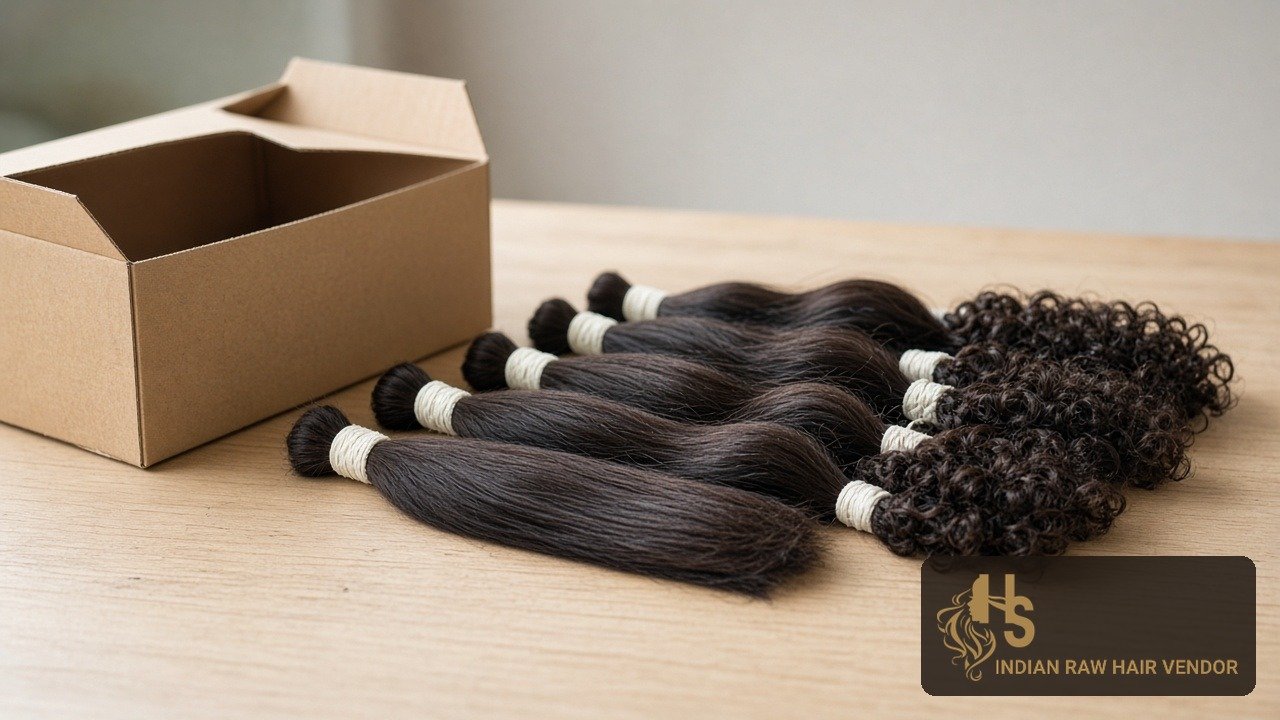
Buying raw hair from India is one of the most common ways salons, stylists and hair brands in the USA, UK and Europe source natural human hair for wefts, closures and frontals. India is known for long, strong, naturally dark hair, and much of it reaches the market as temple hair. But if you have never ordered from overseas before, the process can feel unclear: where does the hair come from, what does raw really mean, and how do you check the quality from thousands of miles away? This guide answers those questions for international buyers who want to buy raw hair from India with confidence.
This article is about the buyer journey from outside India. If you want to compare individual sellers, see our guides to raw Indian hair vendors in India and raw Indian hair exporters. If you are planning volume orders, our raw Indian hair wholesale buying guide covers pricing structures and order planning in more depth.
Why Buyers Look for Raw Hair From India
Indian raw hair has a strong reputation with overseas buyers for a few practical reasons. Indian hair is often long and naturally thick, it comes in a wide range of natural textures, and it usually blends well with many hair types once installed. Because a large amount of hair is collected in India every year, it is also possible to find consistent supply in many lengths and textures, which matters when you need to reorder the same product for your clients.
Another reason is versatility. Raw Indian hair that has not been chemically treated can usually be coloured, styled and heat styled with care, so it works for brands that want to offer custom colours or textures. Our article on raw vs processed hair explains why untreated hair tends to last longer than chemically processed hair.
Where Raw Indian Hair Comes From
Temple hair
A large share of raw Indian hair is temple hair. In India, many people offer their hair at temples as part of religious practice. The temples then sell this collected hair, and it moves on to processors and manufacturers who sort and weft it. Because the hair is often cut in one go and kept together, the cuticles can stay aligned from root to tip, which is one reason temple hair is valued. Our guides to South Indian temple hair vendors and Indian temple hair extensions explain this source in more detail.
Collected hair
Some hair is also collected from other sources, such as hair gathered from combs or salons. This hair is usually shorter and the cuticles may face different directions, so it often needs more processing to be usable. When you buy raw hair from India, always ask the seller what source the hair comes from, because it directly affects quality and price.
South Indian vs North Indian hair
Buyers often see South Indian and North Indian hair listed separately. In general terms, South Indian hair is often described as having natural waves or curls and a darker natural colour, while North Indian hair is often described as straighter, silkier and sometimes finer. These are broad patterns, not rules, and individual batches vary. Read our comparison of South Indian raw vs North Indian remy hair, or browse our South Indian raw hair wefts and North Indian virgin hair wefts to see the difference.
What Raw Actually Means When You Buy Indian Raw Hair
The word raw is used very loosely online. In its true sense, raw hair is hair that has been collected, sorted, cleaned and wefted without chemical treatment, so it keeps its natural colour, natural texture and aligned cuticles. Some sellers use raw for hair that has been steam styled or lightly treated, and some use it for hair that has been acid washed and coated with silicone to look shiny in photos.
Before you place an order, agree on the meaning with your seller. Ask directly whether the hair has been coloured, permed, steam set, acid washed or coated. A trustworthy seller will give a clear answer. Our explainer on raw vs virgin vs unprocessed hair covers the terms in detail.
How to Verify Raw Hair From India Before and After You Pay
Since you cannot touch the hair before it ships, you need a simple verification routine. Use these checks with every new seller.
Before you pay
- Check the business: look for a published address, an About page, clear contact details and written shipping, refund and return policies.
- Ask about the source: temple or collected hair, South or North Indian, and what treatment, if any, has been applied.
- Request a live video: ask to see your actual bundles, not stock photos, including the fullness from top to bottom.
- Ask about natural colour: raw hair is rarely perfectly uniform jet black, so slight natural variation is normal.
- Get terms in writing: confirm lengths, weights, textures, courier and payment terms before you pay.
After the hair arrives
- Weigh and measure each bundle against what you ordered.
- Run your fingers from root to tip and back; aligned cuticles feel smooth one way and slightly rougher the other.
- Wash one bundle with a gentle shampoo and let it air dry to see its natural texture and whether any coating washes off.
- Do a strand test if you plan to colour the hair.
- Wear test a unit for a few weeks before you place a large order.
For a fuller vetting checklist, see our guides on how to vet raw hair suppliers and how to find raw hair vendors.
How Ordering and Import Usually Work
Every seller works a little differently, but most overseas orders of raw hair from India follow a similar path. Knowing the steps helps you ask the right questions at each stage.
- Enquiry: you share the products, textures, lengths, quantities and delivery country you need.
- Quote and confirmation: the seller confirms availability, pricing and shipping options. Check whether the quote includes shipping.
- Pre-dispatch check: ask for a live video or photos of your actual order before it is packed.
- Shipping: most international orders travel by express courier with a tracking number.
- Customs and duties: your country may charge import duty or taxes on arrival. Confirm in advance who pays these and check the rules for your country.
- Inspection: check the hair as soon as it arrives and raise any issue within the seller’s stated return window.
Tip for first-time importers: keep every message, invoice and tracking number together. If there is a problem with a shipment, clear records make it much easier to resolve with the seller or the courier.
What to Compare When You Buy Raw Hair From India
Price per bundle is only one part of the picture. Use a simple comparison like the one below to score each seller on the same points.
| Factor | What to look for | Why it matters |
|---|---|---|
| Hair source | Clear answer on temple or collected hair, and South or North Indian | Source affects texture, cuticle alignment and lifespan |
| Processing | No colour, perm, acid wash or coating, unless agreed | Untreated hair lasts longer and can be coloured more safely |
| Bundle weight and length | Stated weight per bundle and true length | Low-weight bundles can make a low price misleading |
| Consistency | Reorders that match earlier orders | Your clients expect the same hair every time |
| Product range | Wefts, closures, frontals and bulk hair from one source | Matching texture and colour across your products |
| Minimum order | Clear MOQ and whether you can mix lengths or textures | Helps you test without overbuying |
| Shipping and policies | Named couriers, tracking, written refund and return terms | Protects you if something goes wrong |
| Total landed cost | Price plus shipping plus import duties | The real cost of each bundle in your country |
Our article on how to compare the best raw hair vendors includes a scoring method you can reuse, and our guide to wholesale raw hair vendors explains how to build a steady supply once you choose a partner.
Common Mistakes Overseas Buyers Make
- Choosing the cheapest offer without comparing bundle weight and true length.
- Accepting stock photos instead of a live video of the actual order.
- Placing a large first order before testing the hair.
- Forgetting import duties and taxes when working out the total cost.
- Mixing hair from several sellers and then struggling to match texture and colour.
- Not reading the refund and return policy before paying.
Many of these mistakes come from rushing. Taking a few extra days to test a seller usually saves much more time and money later. If you are building a brand, our guide on how to start a hair business with raw Indian hair can help you plan.
Buying Raw Indian Hair From India With Us
If you are considering Indian Raw Hair Vendor, here is what our own pages state, so you can check us the same way you would check any other seller:
- Our About page describes us as a manufacturer, exporter and distributor operating from an officially registered manufacturing facility in India.
- We deal with natural temple hair and state that we do not mix qualities or donors.
- Our range includes South Indian raw hair wefts, North Indian virgin hair wefts, closures, frontals and bulk hair, plus a South Indian temple raw hair wholesale bundle package.
- Our shipping and delivery policy lists DHL, FedEx, USPS and TNT as delivery partners, with tracking sent by email, WhatsApp and text.
- Our wholesale page lists a minimum order quantity of 6, and you can browse current wholesale deals.
Please read our refund and returns policy and frequently asked questions before ordering. To learn how we and other makers work, see our articles on raw Indian hair factories and virgin Indian hair manufacturers, and once your hair arrives, follow our raw Indian hair care guide.
Frequently Asked Questions
Is raw hair from India really unprocessed?
True raw hair from India is collected, sorted, cleaned and wefted without chemical treatment. However, some sellers use the word raw for hair that has been steamed, acid washed or coated. Always ask the seller exactly what has been done to the hair and check it by washing a bundle when it arrives.
What is the difference between South Indian and North Indian raw hair?
In general, South Indian hair is often naturally wavy or curly with a darker colour, while North Indian hair is often straighter and silkier. These are broad tendencies, and individual batches vary, so ask for a live video of the texture you are buying.
How do I buy raw hair from India if I live in the USA, UK or Europe?
Contact the seller with your products, textures, lengths, quantities and delivery country. Confirm the quote, ask for a live video of your actual order, agree on the courier and tracking, and check who pays import duties before you pay.
Will I have to pay import duty on raw Indian hair?
Many countries charge import duty or taxes on goods arriving from abroad, and the rules vary by country and order value. Check with your local customs authority or courier, and confirm with the seller whether any duties are included in the price.
How can I test a new seller of Indian raw hair?
Start with a small test order. Weigh and measure each bundle, wash one to see its natural texture, do a strand test if you plan to colour it, and wear test a unit before ordering in volume.
Ready to Source Raw Hair From India?
Buying raw hair from India works best when you know the source, agree on what raw means, verify the hair before and after you pay, and compare sellers on total landed cost rather than price alone. If you would like to work with us, send the products, textures, lengths and delivery country you need through our wholesale page or chat with us on WhatsApp, and we will confirm availability, pricing and shipping for your order.

Suraj Gupta
Hair Enthusiast & Founder, Indian Raw Hair Vendor
“I travel across South & North Indian villages to source real, ethically collected raw hair — so you get 100% Authentic Single-Donor Indian Raw Hair with honesty, purity & unmatched quality”
Having 10+ years of excellence in the hair industry & Trusted by 100+ Global stylists to scale their business.
